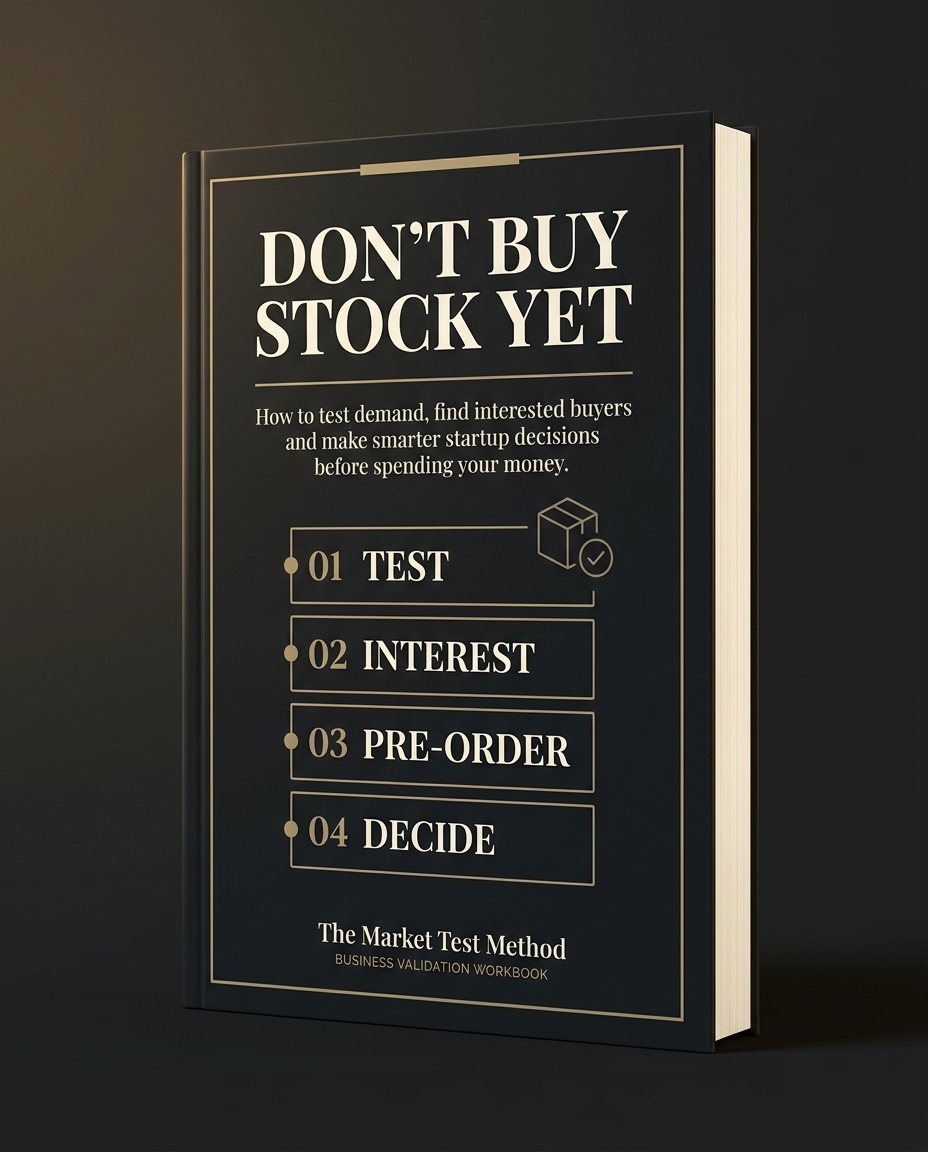
DON'T BUY STOCK YET.
How to test demand, find interested buyers and make smarter startup decisions before spending your money.
What if you could learn more about your idea before committing your money to it?
Having an idea is exciting. Spending money on that idea is a different decision. This workbook gives you a practical way to slow down, test assumptions and gather evidence before making a bigger commitment.
Starting a business can become expensive before you know what deserves your money.
A logo can look beautiful. Packaging can look professional. A supplier can have attractive products. None of those things automatically prove that buyers want what you are preparing to sell.
The goal is not to avoid spending forever. The goal is to make the important spending decisions with better evidence.

You do not need another promise. You need a process you can actually use.
Instead of relying on invented success stories or guaranteed outcomes, this workbook focuses on practical evidence: conversations, responses, objections, offers, pre-orders where appropriate, and a clear decision point.
Evidence
Look for signals from real people rather than assuming interest.
Clarity
Separate curiosity from stronger buying signals.
Decision
Use what you learn to decide what happens next.
Looking ready is not the same as being validated.
MYTH
"If I build the brand, buy the stock and make everything look professional, customers will come."
REALITY
A polished business can still be built around an assumption that has never been properly tested.
Logo First
A logo can support a business. It cannot prove demand.
Stock First
Buying inventory before testing can increase your exposure to an unproven assumption.
Research Forever
Research is useful, but eventually you need to learn from real market responses.
TEST → INTEREST → PRE-ORDER → DECIDE
The workbook turns an uncertain idea into a sequence of smaller decisions. You test what matters, look for interest, use pre-orders where appropriate, then decide what the evidence suggests.
TEST
Define the idea, problem, buyer and biggest assumption that needs testing.
INTEREST + PRE-ORDER
Talk to potential buyers, test your message and measure stronger forms of interest.
DECIDE
Use what you learned to proceed, modify the idea, test again or walk away.
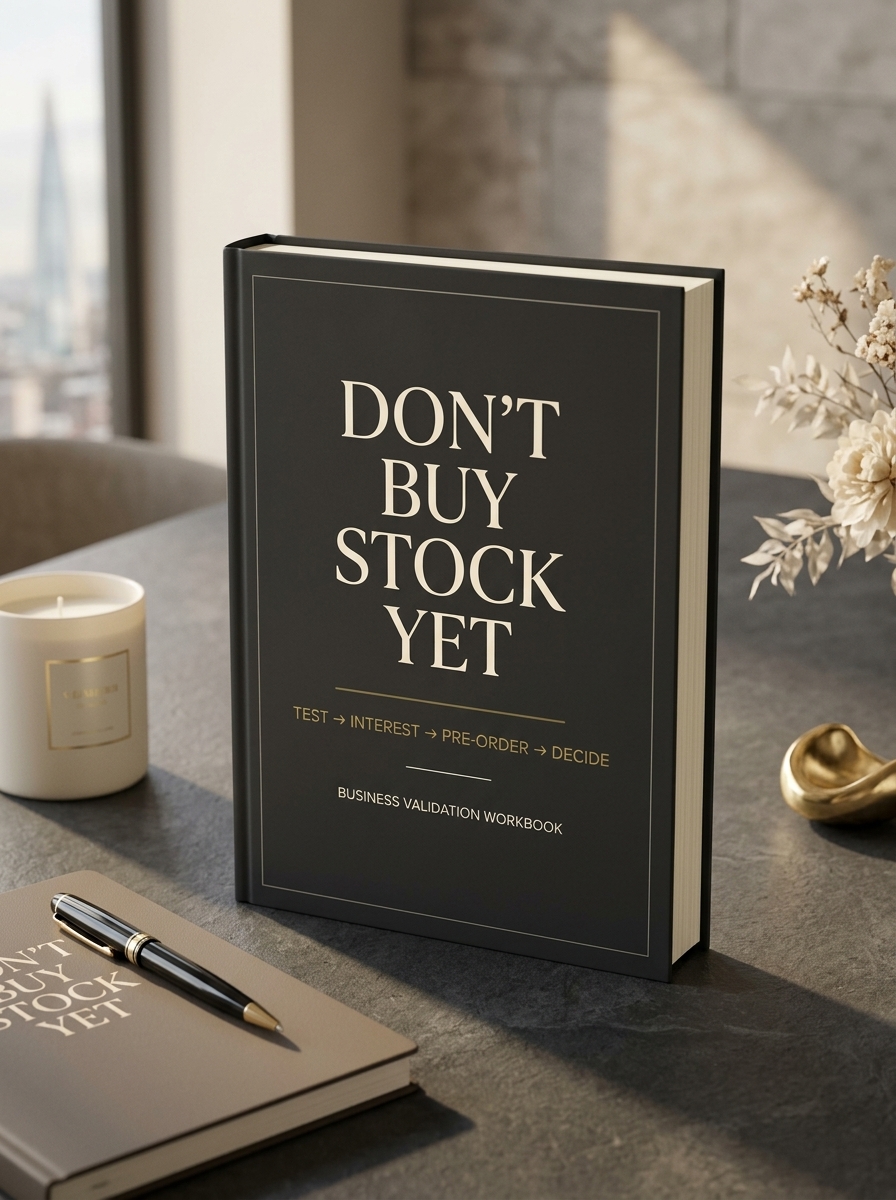
A practical decision-making workbook for your next business idea.
Not a motivational ebook. Not a promise of guaranteed success. A guided workbook designed to help you think, test, record what happens and make a more informed next decision.
- Work through your idea before making bigger commitments.
- Identify the assumptions that need evidence.
- Learn what to ask potential buyers.
- Track responses and objections.
- Explore pre-orders where appropriate.
- Make a clear proceed, modify, test again or abandon decision.
From idea to evidence to decision.
Test
Define the idea, problem, why now, alternatives and your biggest assumption.
Interest
Learn who to speak to, what to ask, how to describe your idea and how to run a message test.
Real Interest
Separate curiosity, interest and stronger readiness-to-buy signals.
Pre-Order
Work through your offer, audience, communication, tracking and objections.
Decision
Use your evidence to decide whether to proceed, modify, test again or abandon.
Protect Your Money
Think through risk, affordability, unknowns, evidence and the next useful test.
Spending Filter
Ask what you are buying, why you need it, what evidence exists and what can be tested first.
Testing Worksheet
Put the framework into practice with a structured business testing worksheet.
21-Day Test Plan
Move from defining your idea to reviewing evidence and making a decision.
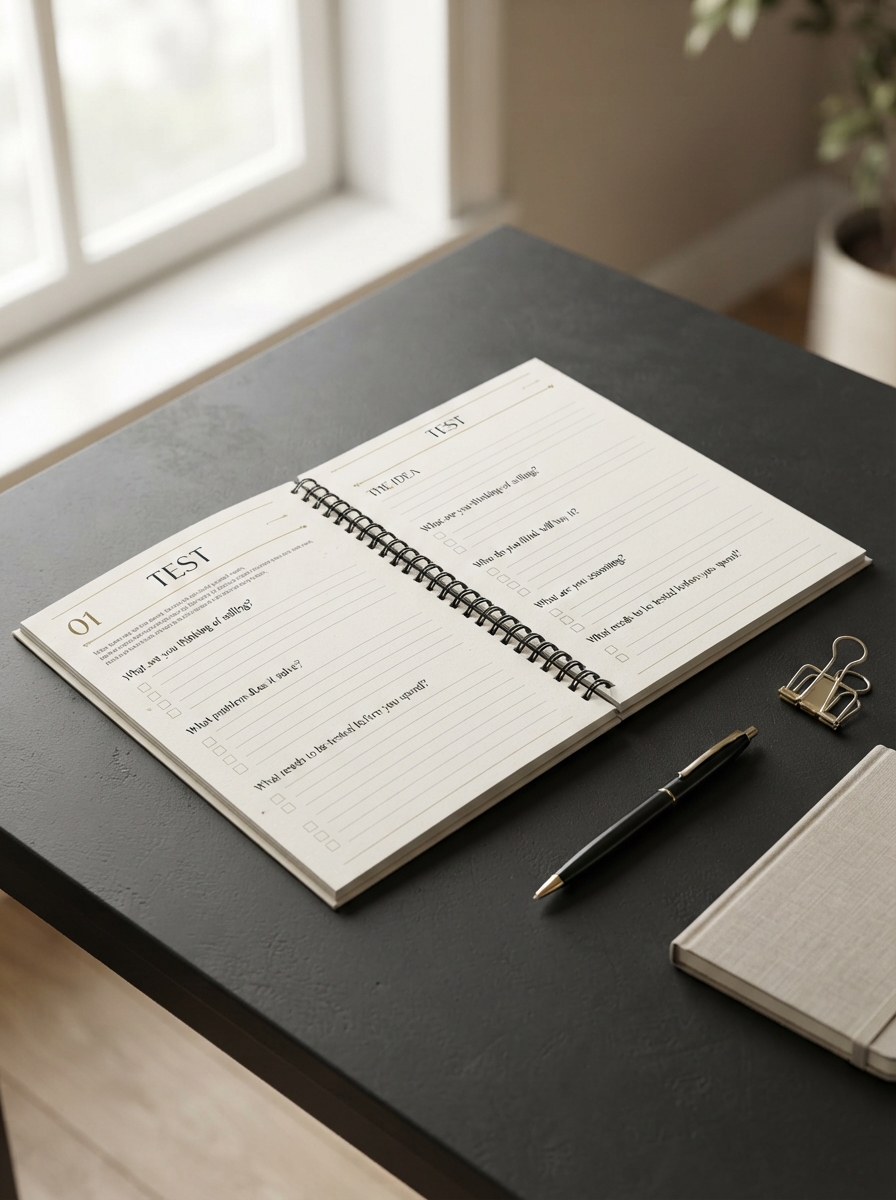
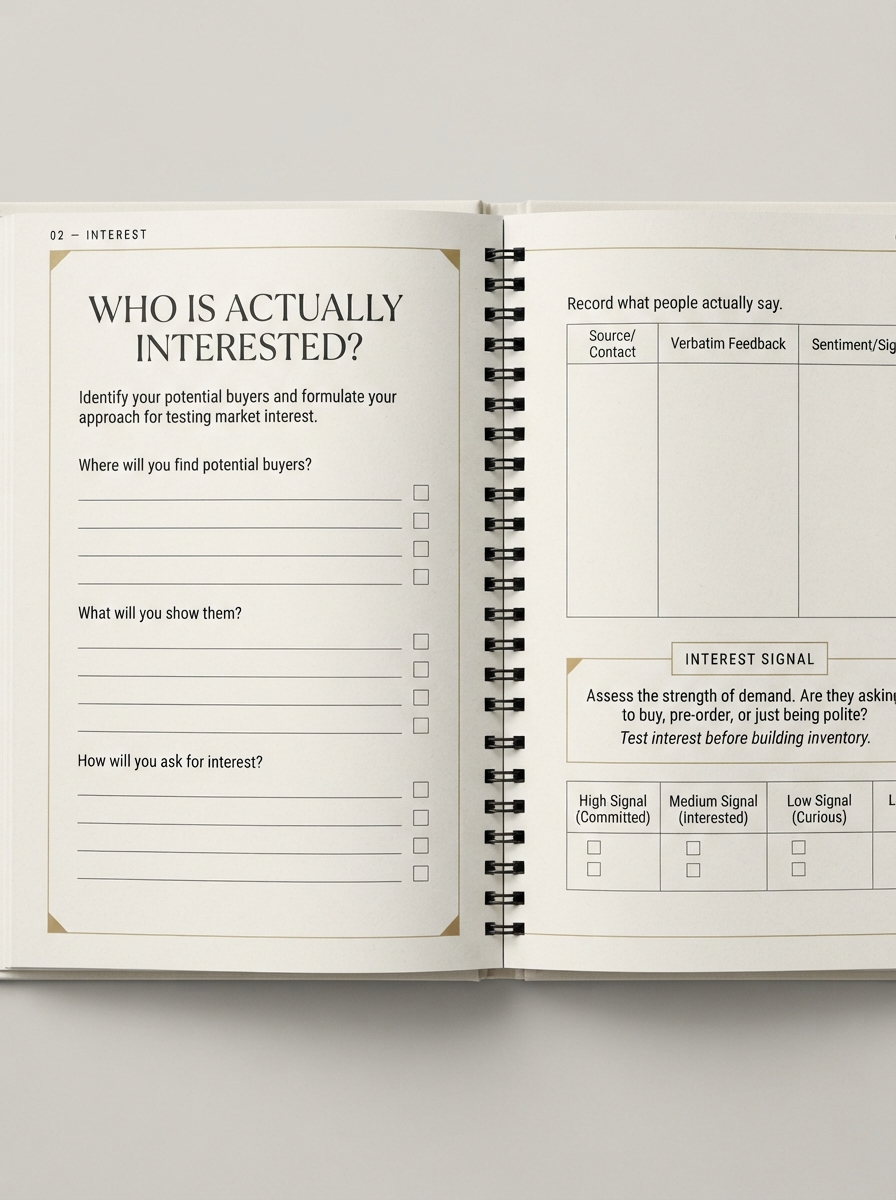
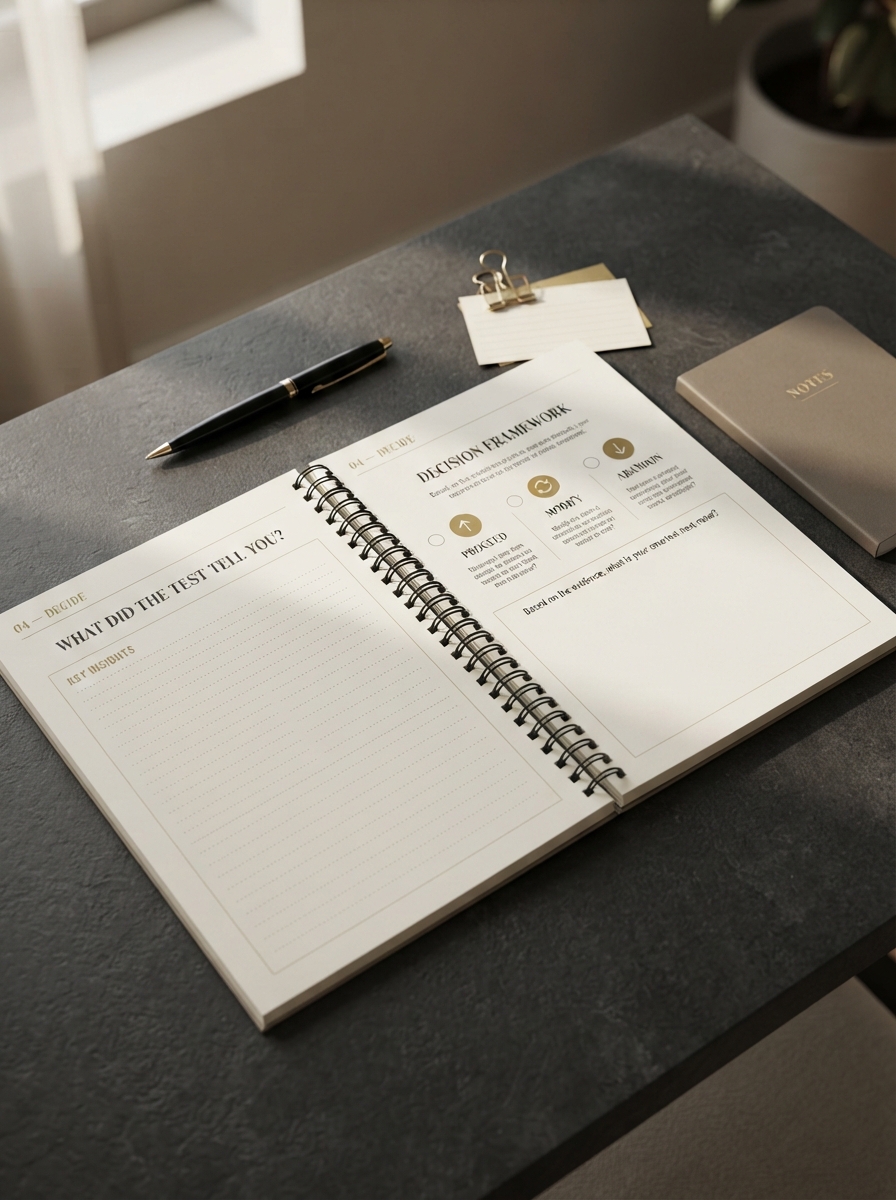
No invented testimonials. No made-up success stories.
Rather than manufacture customer quotes before there are real customers to quote, this page shows exactly what the workbook is designed to help you work through.
"I have an idea."
The workbook gives you questions and exercises to turn the idea into something you can actually test.
"I do not know if people want it."
The process helps you look for real responses instead of relying entirely on assumptions.
"I do not want to waste my money."
The framework helps you identify what can be tested before a larger commitment.

Before you spend, give yourself something to compare.
| Without a testing process | With this workbook |
|---|---|
| Start with assumptions | Identify the assumptions first |
| Buy before learning | Look for evidence before bigger spending |
| Guess what customers want | Ask and listen to potential buyers |
| Confuse likes with demand | Look for stronger signals of interest |
| Keep going because you already spent | Review the evidence and decide |
Get the workbook plus three practical tools.
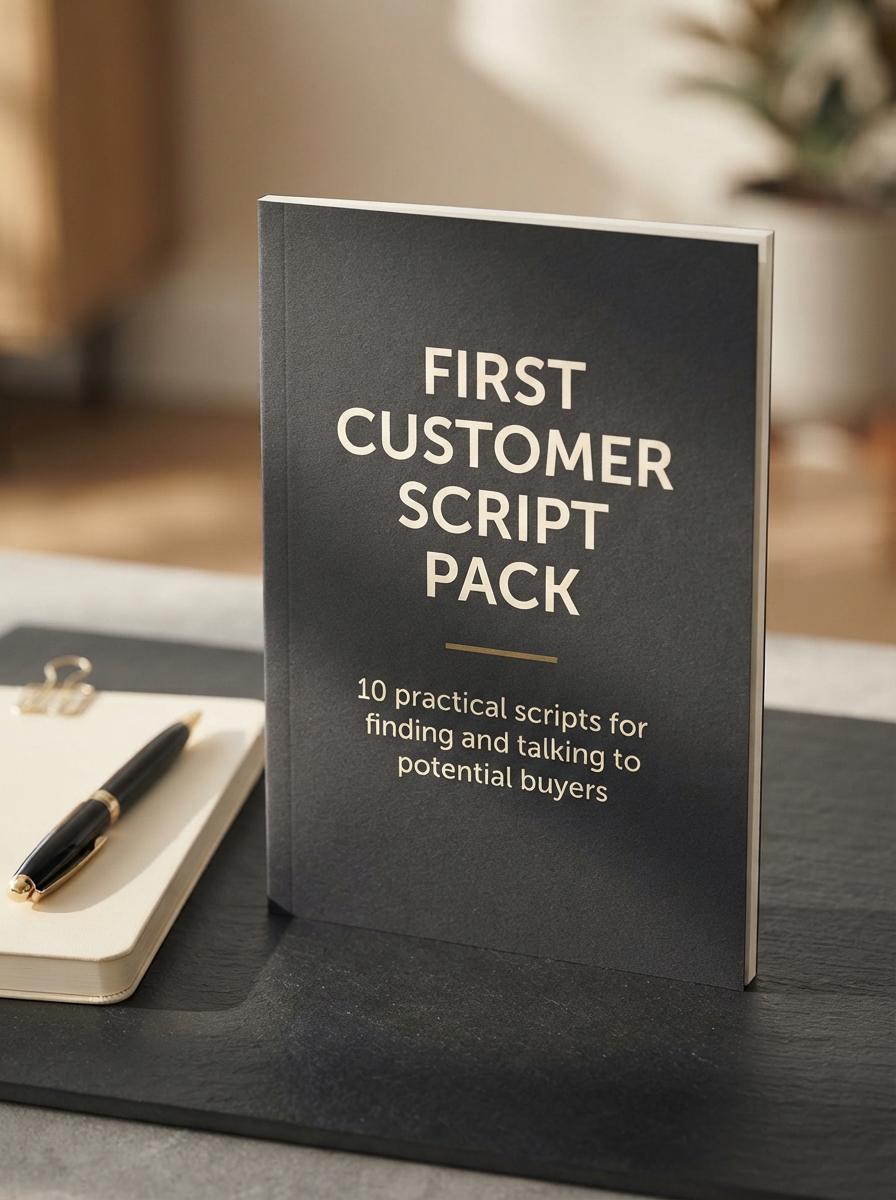 BONUS 01
First Customer Script Pack
Practical starting points for conversations with potential customers.
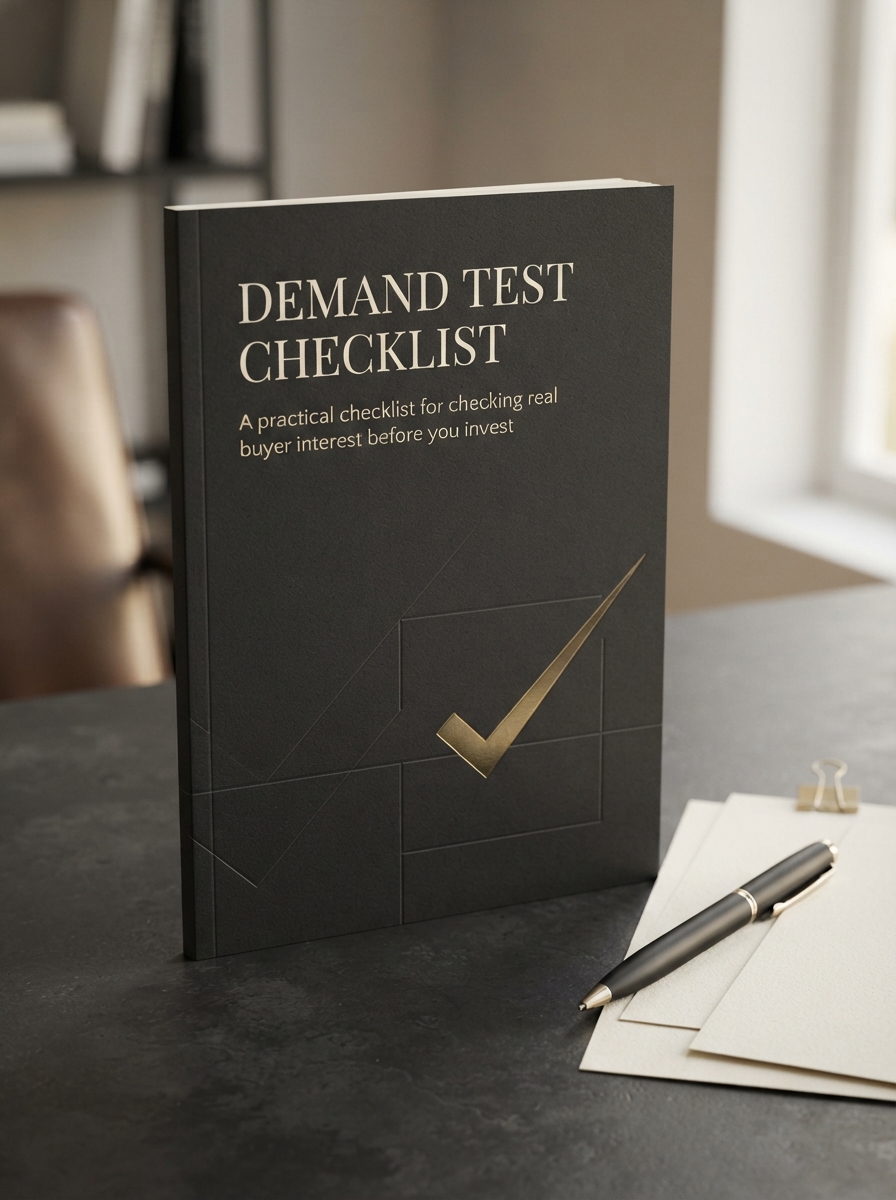 BONUS 02
Demand Test Checklist
A simple checklist to help you work through the testing process.
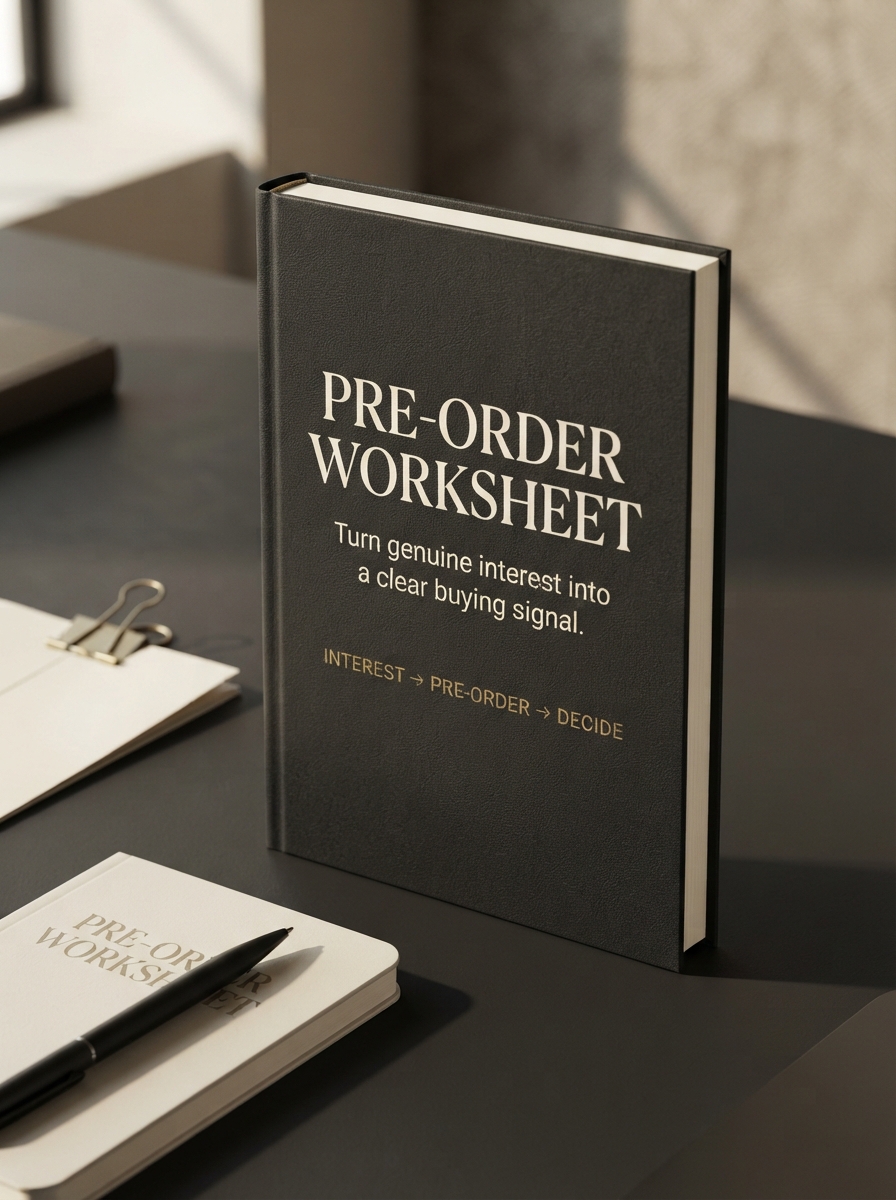 BONUS 03
Pre-Order Worksheet
A structured place to think through a pre-order test where it makes sense for your idea.
Your idea deserves more than a guess.
If you are considering an idea and want a structured way to test it before making a bigger commitment, this workbook gives you a place to start.
What this workbook can and cannot do.
It can help you
Structure your thinking, identify assumptions, talk to potential buyers, record signals, test offers and make a more informed next decision.
It cannot promise
Guaranteed sales, guaranteed profits, guaranteed demand or a guaranteed business outcome. Your market, offer, execution and circumstances still matter.
You do not need to force every idea to work.
Evidence supports the next step.
You found useful signals. Now you can decide what needs to happen next, including a larger investment if the evidence and your circumstances support it.
The evidence says rethink it.
Modify the idea, test another assumption, change the offer or walk away. Learning that an idea needs work is useful information too.
Questions before you start.
Is this only for people selling physical products?
No. The principles can also be applied to services, digital products and other business ideas. Adapt the tests to what you are actually trying to sell.
Do I need an existing business?
No. The workbook is designed to help you work through an idea before committing to a larger launch.
Does it guarantee that my idea will sell?
No. Nothing can honestly guarantee that. The purpose is to help you learn more before making bigger decisions.
What is the main method?
TEST, INTEREST, PRE-ORDER and DECIDE. The workbook takes you through the thinking and exercises behind each stage.
Can I use this outside Nigeria?
Yes. The framework is designed around general customer research, demand testing and decision-making, so you can adapt it to your market and audience.
Is this a course?
No. It is a practical workbook designed to be worked through as you test your idea.
Start with the question that matters.
Instead of trying to make an idea look like a business immediately, first learn what you can about whether the idea deserves the next step.
Do not spend because you are excited.
Do not spend because everyone else is doing it. Do not spend because you are afraid of missing out.
Spend when you understand what you are buying, why you need it, what evidence you have and what risk you are taking.
Before you buy the stock, test the idea.
Your starting point matters. Your resources matter. And the decisions you make before spending can matter too.